
 Deedok IT Solutions
In the current digital world, a website is more than just an online page for a business. It may be helpful, as websites can be used to sell products, collect customer data, handle accounts, process payments, share details, and help offer different online services.
As we know, websites are becoming more advanced; businesses need potent development solutions that may manage both the visible and technical parts of a site. This is where FullStack Website Development Services become helpful.
Full-stack development covers both the back end and front end of a site. The front end is the part users see and show interaction with. On the other hand, the back end helps to handle the server, application logic, database, and other technical functions.
If you are a business owner, you may create websites that are alluring, functional, sales-driven, and easier to handle with the help of full-stack website development.
It may also help lower the need to work with separate developers for various parts of a project. In this guide, we will discuss the major benefits of full-stack web development and why it might be a helpful choice for modern businesses.
What is FullStack Website Development?
FullStack website development means developing both the frontend and backend of an application. Every application comes with two major parts: the frontend, which users see and utilize, and the backend, which manages the database, logic, and other essential functions.
Frontend development includes the user interface and code associated with user interactions with the application. The backend includes all the code needed for the app to run, including integrations with data systems, connecting with other applications, and processing data.
Frontend and backend development require various skills, tools, and technical knowledge. Full-stack development combines both areas, which lets developers create an application from start to finish in a connected way. A full-stack application includes both frontend and backend parts, often working together inside the codebase or the same project.
How Does Full Stack Development Work?
A full-stack website generally has several connected layers.
Front End
The front end is generally responsible for the user experience. Common technologies involve CSS, HTML, React, JavaScript, Vue, and Angular. The major aim is to make the website easy to utilize, visually clear, and responsive.
Back End
The back end helps to manage the main functions of the site. Technologies might include Python, Node.js, Java, PHP, and other programming frameworks and languages. It handles process details, requests, connects with databases, and manages business logic.
Database
The database stores details generally used by the site. This might involve product information, customer accounts, messages, orders, or other business data. Well-known database technologies include PostgreSQL, MySQL, MongoDB, and others.
Server
The server assists in delivering the site and processing requests. It helps to connect the back end, front end, and database so that the complete system might function in a proper way. Because all these parts require to function together, fullstack website development needs a good understanding of the thorough development procedure.
Major Benefits of FullStack Website Development Services
Complete Website Development
FullStack website development covers the entire website, and that’s one of its biggest benefits. In full-stack development, developers may work on both areas, instead of focusing only on the technical back end or only the visible design.
This assists in creating better coordination between different parts of the project. For instance, the design of a registration page might be developed together with the back-end system that stores and helps to handle user information. This thorough approach may make development more productive and organized.
Budget-Friendly Solutions
If you hire separate developers for back-end, front-end, and database management, it can be expensive. Hiring a full-stack developer is a good plan as it lowers costs by combining these roles in a single team and helps to ensure better resource utilization. This also reduces overhead costs, as businesses do not need to handle multiple vendors.
On-Time Development and Time-to-Market
If you are a startup, you want to bring your items to market instantly. Full-stack development might assist you in achieving that. By having a full-stack developer who can manage different tasks, you may easily cut down on delays. They can easily blend various elements of your project and make progress faster.
Full-stack development also enables quick iteration and prototyping, making it easier to bring your products to market quickly. So, if you choose full-stack development, you may get your items out there in no time.
Better Team Collaboration
In the world of startups, clear communication between your team is vital. When you hire a full-stack developer, they play a major role in bridging the gap between your development and design teams.
This assists in streamlining your workflow and ensuring everyone is on the same page. With their expertise in both back-end and front-end technologies, full-stack developers might really increase collaboration and help to make your processes more flexible.
Easy Adaptation to New Technology
Technology evolves in a quick way, and businesses require it to stay updated. Full-stack developers have knowledge of multiple programming frameworks and languages, which assists them in working with numerous technologies and adding new features without impacting current operations.
Scalability
Scalability is another benefit of full-stack development. As your startup expands, you will require technology solutions that might manage your changing requirements, and this is where full-stack developers might help.
They might easily scale and measure applications and ensure your technology supports your growing business needs. This means you don’t have to worry about your technology becoming outdated or not able to support your business growth.
Flexible Testing
Testing is a vital element of website development. A full-stack developer may test multiple parts of the website and help monitor how they work together. A full-stack developer may test different parts of the site and monitor how they function together. Testing might include:
- Back-end testing
- Front-end testing
- Security testing
- API testing
- Database testing
- Mobile responsiveness testing
- Performance testing
Testing the whole system might be helpful in analyzing issues before they impact users.
Helpful for Web Applications
Fullstack website development isn’t limited to simple business websites. It is also widely used for web apps.
Examples might include:
- E-commerce platforms
- Booking systems
- Customer portals
- Learning platforms
- Business dashboards
- Project management tools
- Online marketplaces
- Social platforms
These applications generally require both an interactive front end and a potent back end. If you want to build advanced web solutions for your business, full-stack development services can be helpful.
Full Stack Development for Modern Business
Nowadays, businesses require websites that can do more than display details. A modern site might need to connect with payment gateways, third-party APIs, customer databases, email systems, analytics tools, and other services.
This is where FullStack website development services becomes mainly helpful. A full-stack developer might understand how these various systems communicate and assist in connecting them to the site.
If you are planning a new site or web application for your business, you should choose the right development approach. The technology must match the expected leads, business goals, needed features, and future plans.
What is the difference between full-stack development and traditional development?
Full-stack website development helps to manage both the frontend and backend of an application. On the other hand, traditional development generally splits these tasks among separate backend, frontend, and database teams.
|
Feature |
Full-Stack Development |
Traditional Development |
|
Team Structure |
Cross-functional or single developer generalist |
Specialized roles (DBA, frontend, backend) |
|
Workflow |
Thorough control over the code |
Coordination between different teams |
|
Speed & Price |
Quicker turnaround and lower staffing rates |
Delays due to team coordination |
|
Scope of Expertise |
Wider understanding across data and UI services |
Intense specialization in a single layer |
Whether you want full stack development or traditional development, the right development model is based on the project’s needs and size. Large applications might still benefit from specialized development teams working together.
What to Consider When Choosing the Right Full Stack Development Company
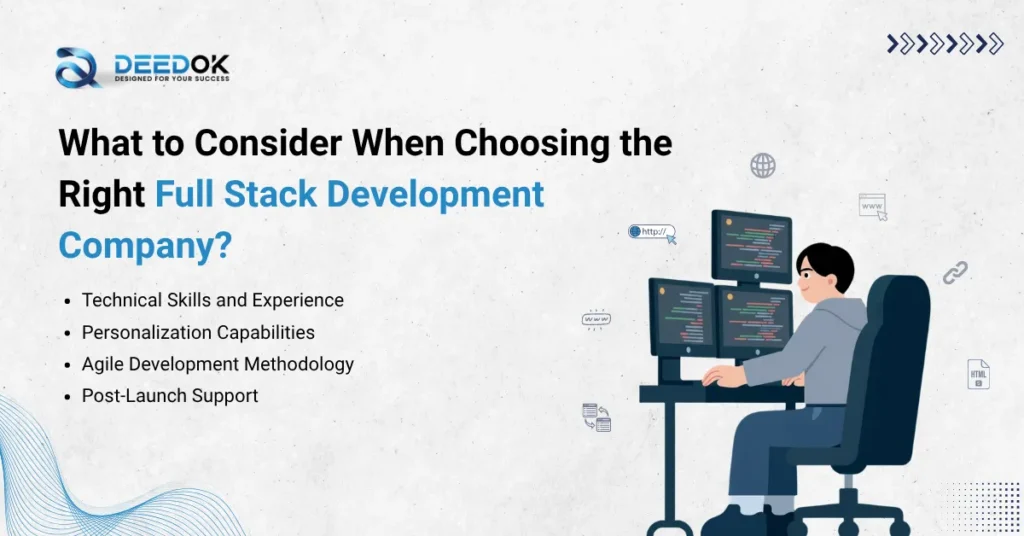
If you want to invest in Full Stack Development Services, be sure to choose the right development team for proper guidance. A relevant partner ensures that software solutions are built efficiently, work seamlessly, and evolve with changing business requirements. Here’s what to consider:
Technical Skills and Experience
A development company must have strong experience in working with back-end and front-end technologies. A highly experienced team should understand different frameworks, programming languages, and databases, such as React, JavaScript, Node.js, Angular, Ruby, Python, Rails, and NoSQL/SQL databases. This broad range of technical skills assists businesses in getting flexible solutions that match their critical requirements.
Experienced developers may also identify potential challenges early and follow best practices to build high-performing, scalable applications. This helps to ensure that the final application functions smoothly, supports business growth, and might adapt to future technology changes.
Personalization Capabilities
Every business comes with different requirements, and a good development company must provide personalized solutions rather than using the same templates for everyone. A reliable development partner, such as DeedOK IT Solutions, understands the business aims, industry challenges, and user requirements before building software that supports the goals of a business.
Their custom solutions also let businesses connect current systems, maintain their brand recognition, and add helpful features that help them stand above their competitors. This approach makes sure the software fits the business in a proper way and may support changing requirements as the company expands over time.
So if you are seeking the best web development company in India, you may choose DeedOK IT Solutions as your final stop.
Agile Development Methodology
An agile development approach assists businesses in responding faster so that they may change market requirements. By splitting projects into smaller and manageable sprints, businesses may get daily updates, test features, and share feedback during the development process.
This step-by-step approach assists developers in finding and fixing issues early, lowering development time, and ensuring the final product matches changing business needs. Agile methods also enhance communication between development teams and business stakeholders, assisting in creating better, more helpful, and user-friendly applications that meet customer expectations.
Post-Launch Support
Software development doesn’t end after the product is launched. Daily updates, maintenance, and security checks are essential for long-term success. A reliable full-stack development partner, such as DeedOK IT Solutions, provides daily monitoring and bug fixes to keep the application running smoothly.
As technology changes, businesses might also need to add new tools, move to newer platforms, or scale the application to manage more users and business requirements.
Conclusion
Full-stack development offers startups a strong advantage by simplifying the process of reducing costs. It also helps businesses launch products faster, improve performance, support better teamwork, and scale applications as they grow.
DeedOK IT Solutions provides customized full-stack development services generally designed to meet multiple business requirements. DeedOK has skilled developers and practical solutions, so they help businesses create scalable, reliable, and user-friendly applications.
Whether you are just a startup or want to improve an existing application, you must choose the right full-stack development partners so that they may help you achieve your goals. They also support you in long-term business growth.
Frequently Asked Questions
Full-stack development is suitable for small to medium-sized projects, including MVPs, and agile teams. Big enterprise applications might still benefit from experts for highly complex components.
A full-stack developer requires proficiency in front-end technologies, database management, back-end languages, and version management systems.
Full-stack website development means creating both the front-end and back-end of a site or web application.
Full-stack development might range from affordable to quite expensive based on whether you are hiring talent, building an app, or learning the skills yourself.
Professional services may offer technical expertise across various parts of a project and help businesses build, test, launch, and manage their sites more efficiently.
Yes, a full-stack website might be fully customized. In fact, full-stack development is the ultimate approach for building a tailor-made digital solution.
Comments (0)
Leave a Comment